Silver and gold fuming: how galaxy glass is made
By Sinem, NoccoNocco glass studio · Updated 28 November 2026 · 4 min read
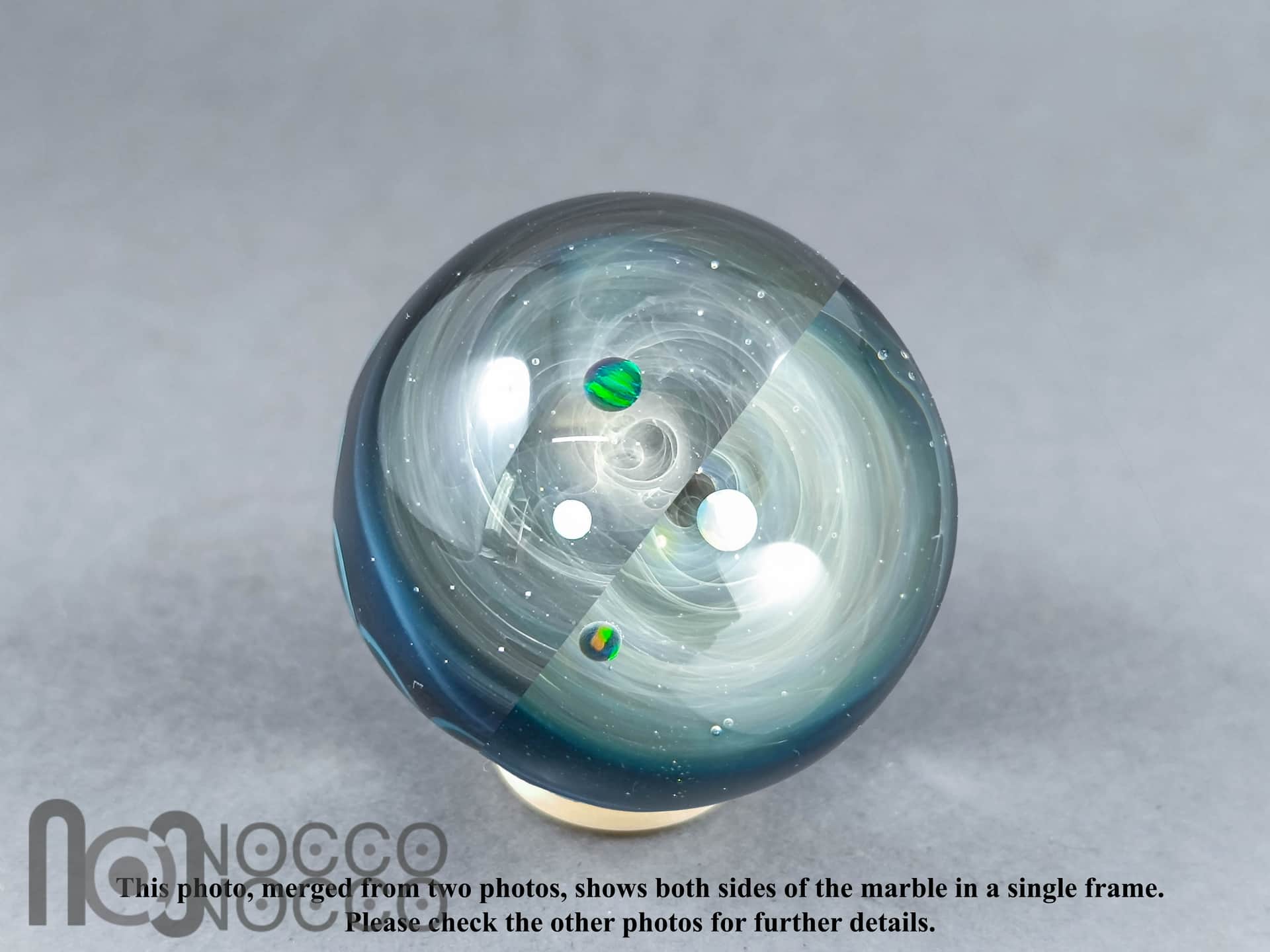
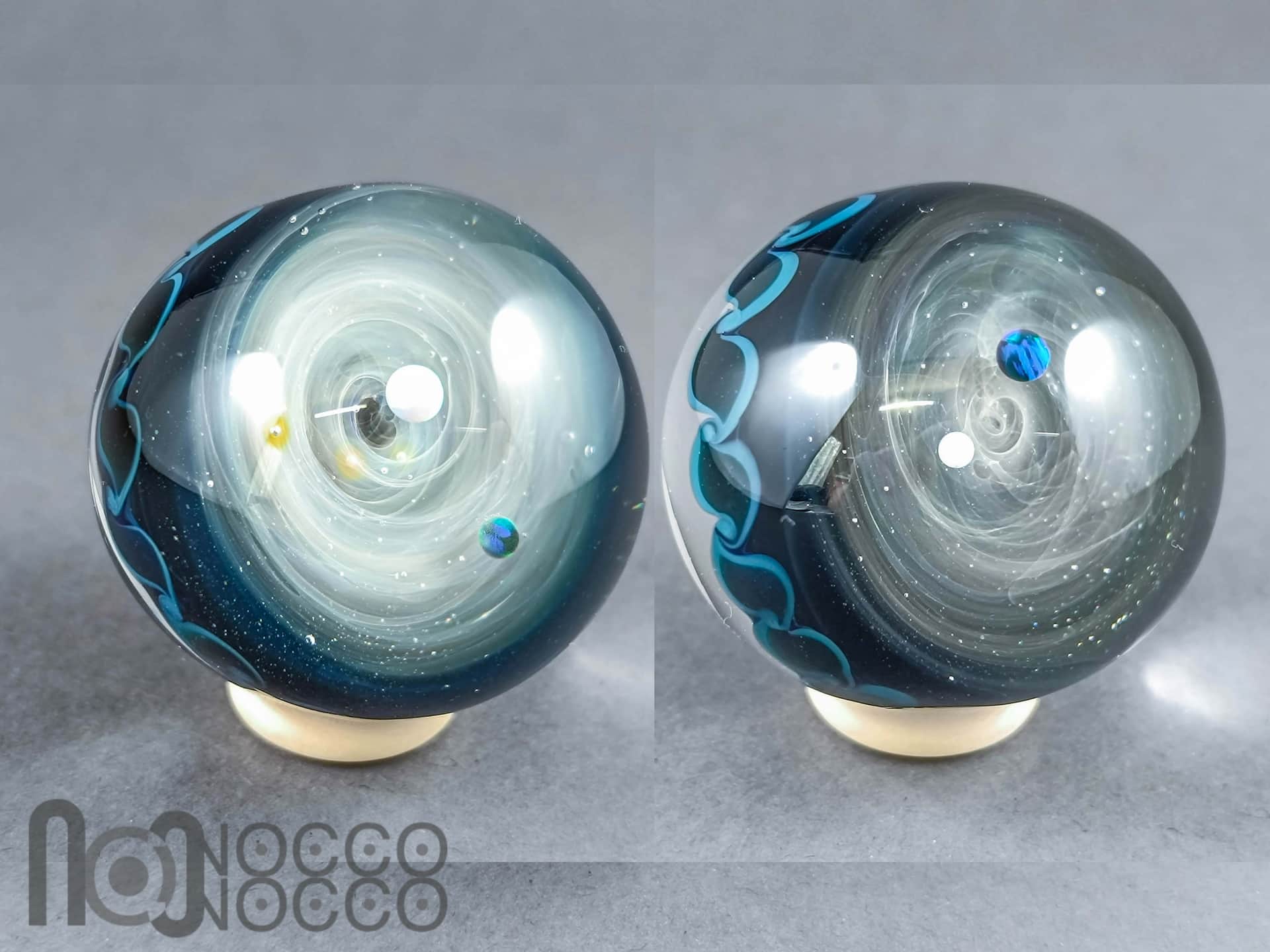
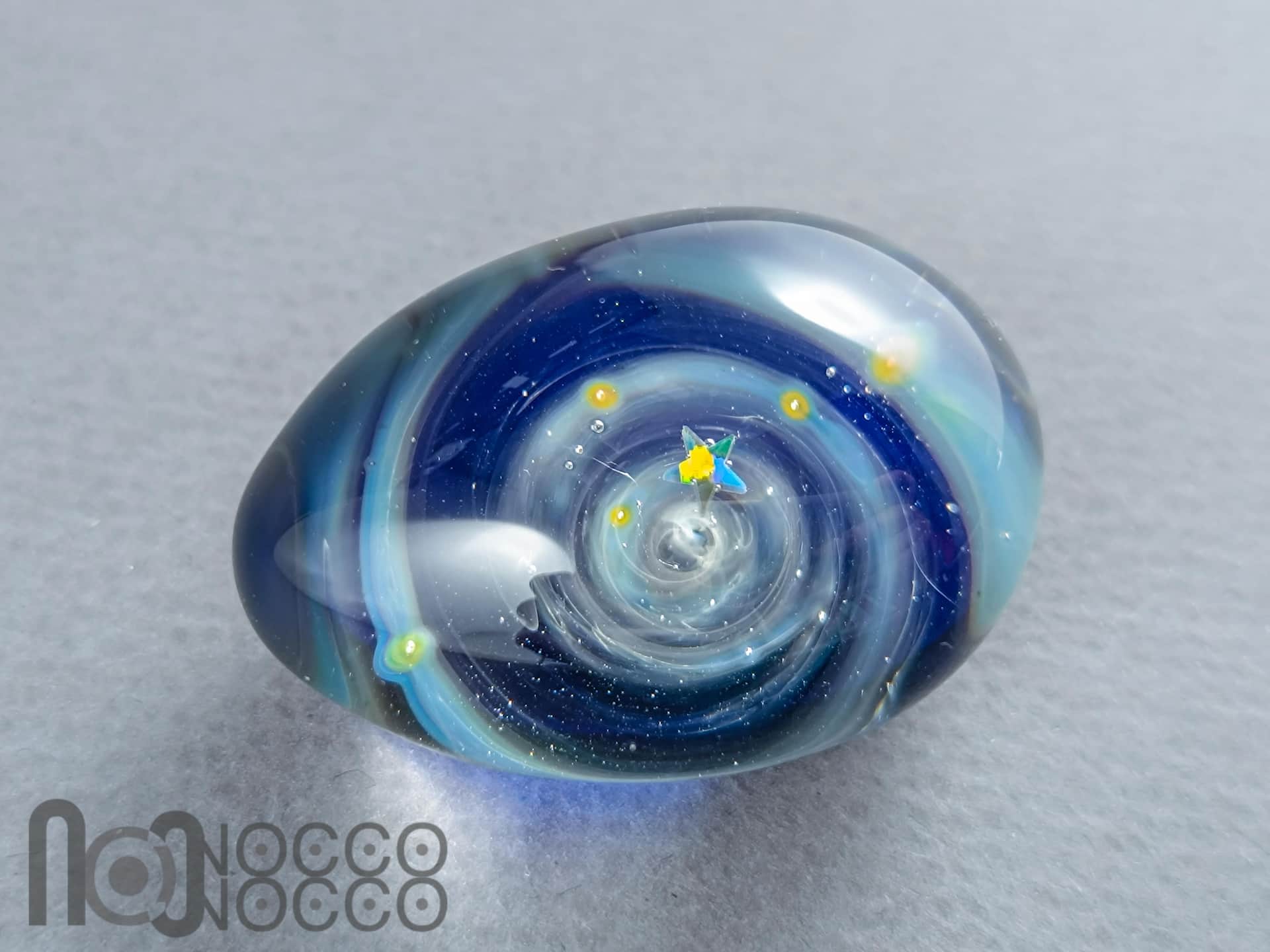
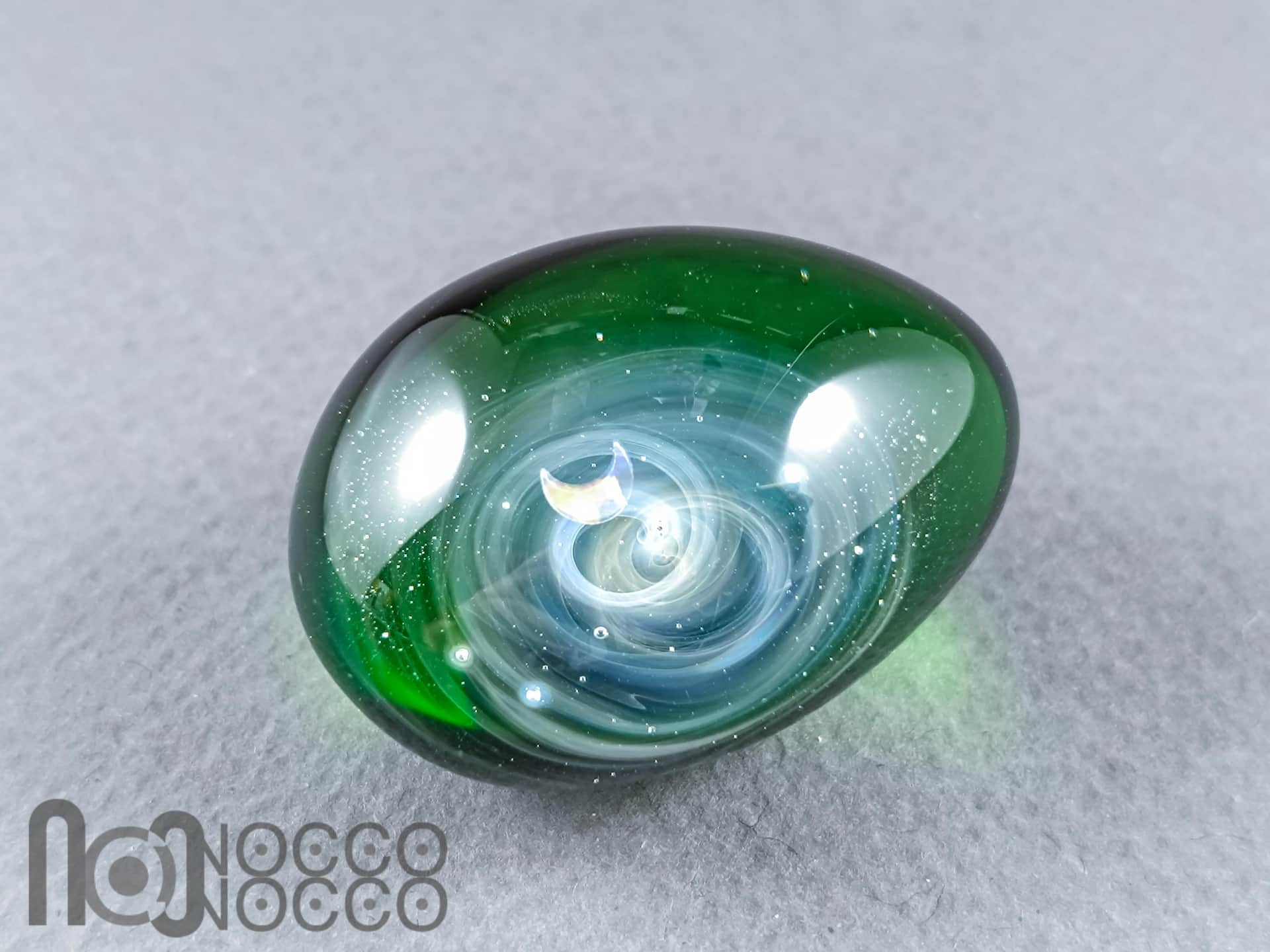
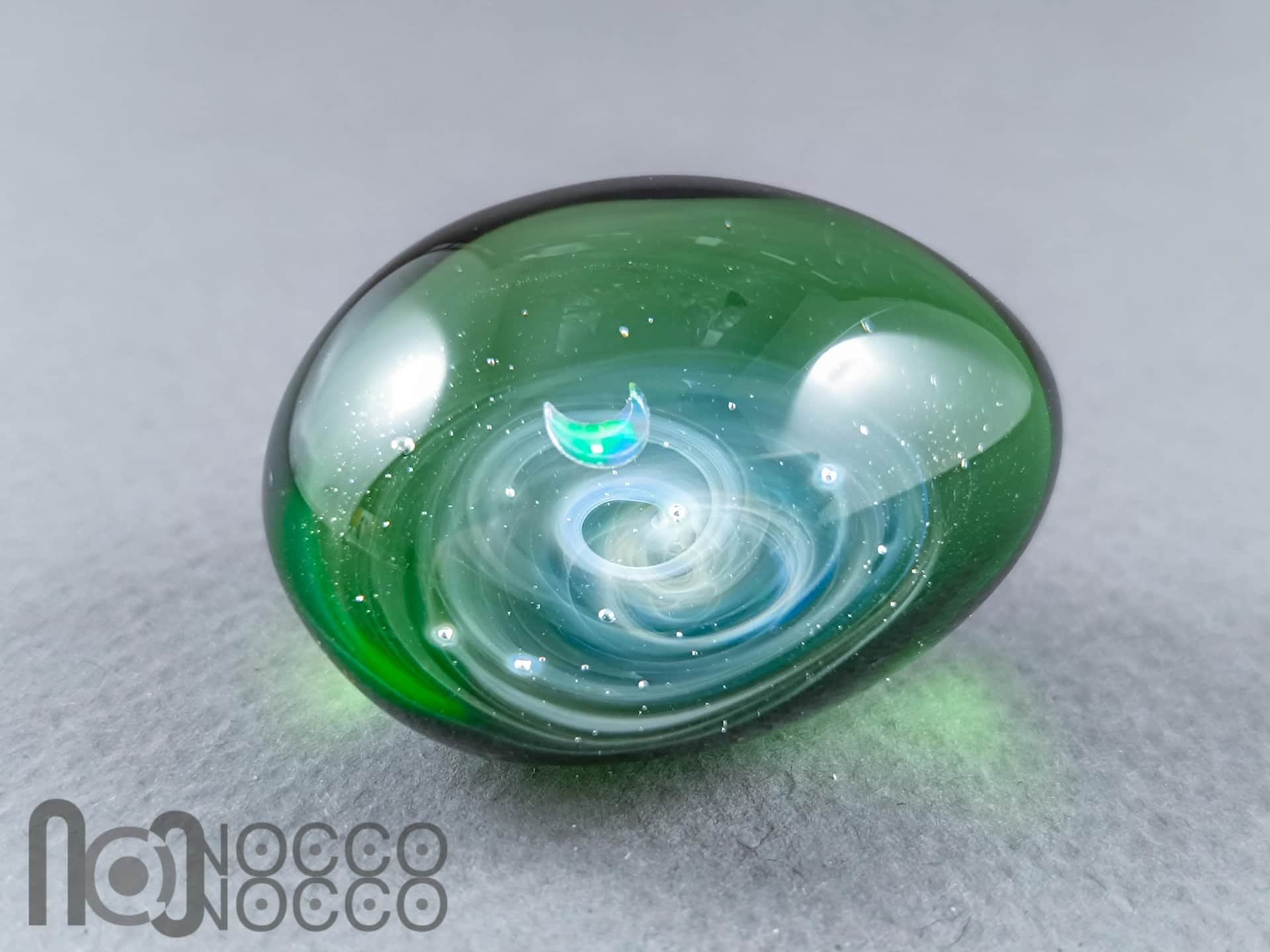
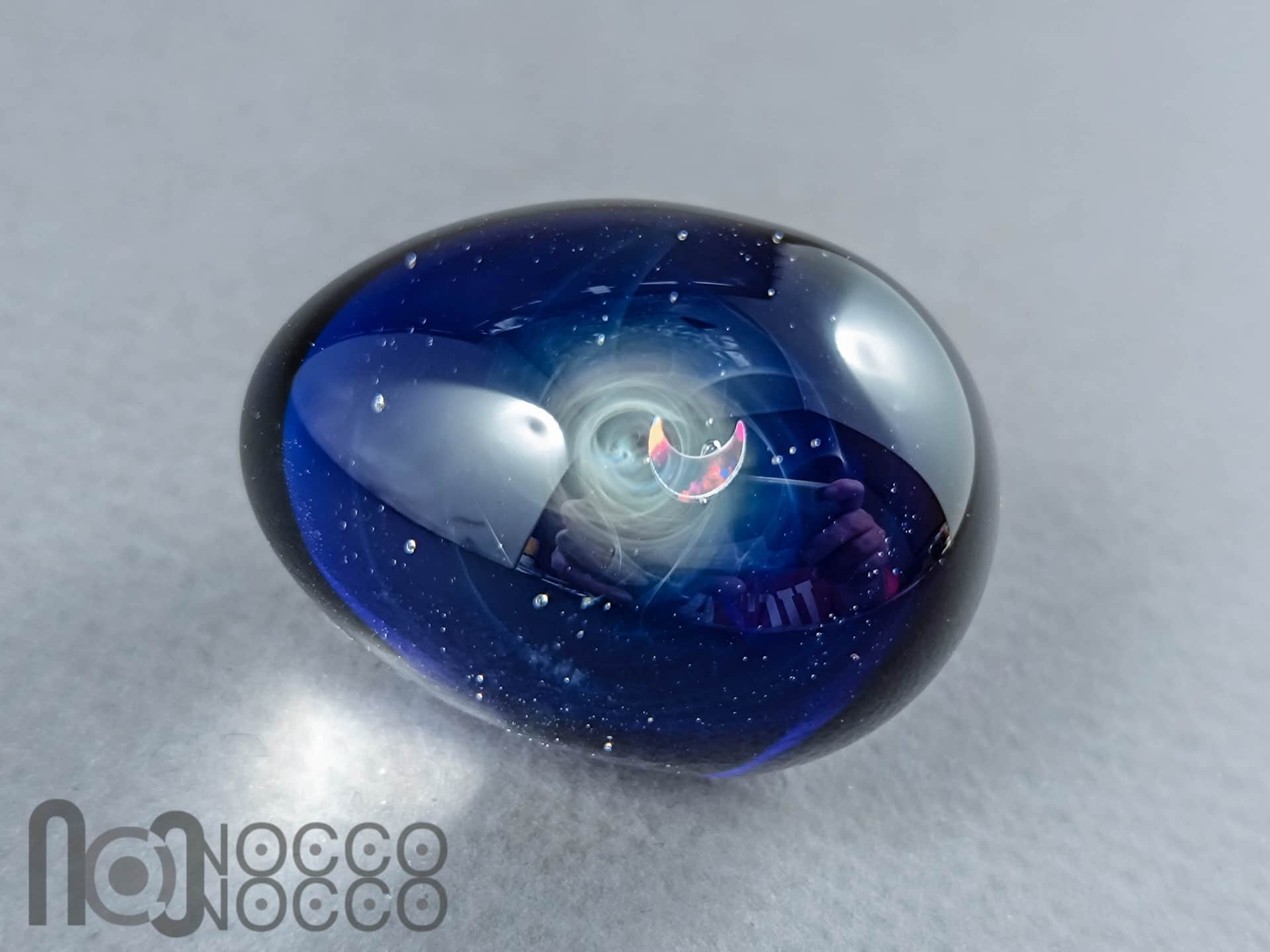
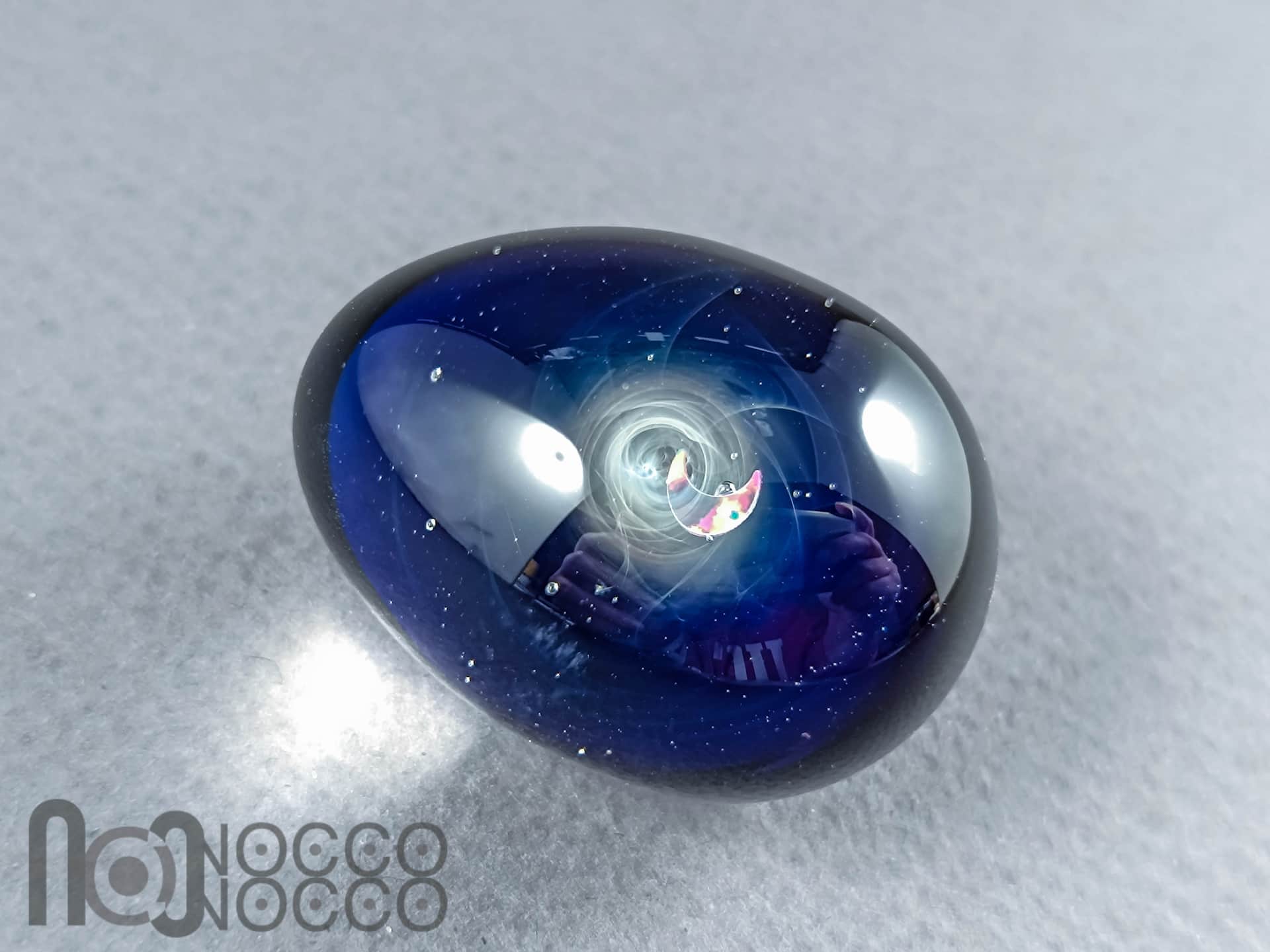
Fuming is a lampworking technique in which pure metal, .999 fine silver or 24k gold, is vaporised in the torch flame. The vapour settles on hot glass as a microscopic layer, which is then melted in or encased under clear glass, so it can never wear off. Silver and gold give the shifting blues, ambers and pinks of a galaxy marble or pendant, and the colours change with the light and the background.
What fuming is
In fuming, a small piece of .999 fine silver or 24k gold is held in the torch flame until it vaporises. The metal vapour drifts onto the hot glass and leaves a layer only a few atoms thick. It is too thin to see as metal. What you see is colour.
Sinem works in borosilicate glass at the torch, a method called lampworking. The fumed layer is then melted into the surface or encased under clear glass, so the colour sits inside the piece rather than on top of it.
Why the colours shift
A fumed layer reflects some light and lets the rest pass through, so the colour depends on how you look at it. Seen against a dark background, silver often reads blue or teal; held up to the light, the same glass can glow amber or gold. Gold fuming tends towards pinks and soft reds.
That is why a galaxy marble looks different on a desk, in your palm or on a lamp-lit shelf, and why no two fumed pieces ever come out alike. Each one is one-of-a-kind.
Does fumed glass wear off or fade?
No. Because the metal is fused into the glass or sealed beneath a clear layer, there is nothing on the surface to rub away, wash off or tarnish. The colour lasts as long as the glass does, and light does not fade it.
One caution has nothing to do with the colour: a solid clear sphere can focus direct sunlight like a lens, so keep marbles out of direct sun. Our sunlight guide explains why.
The opals inside: lab-made, and why
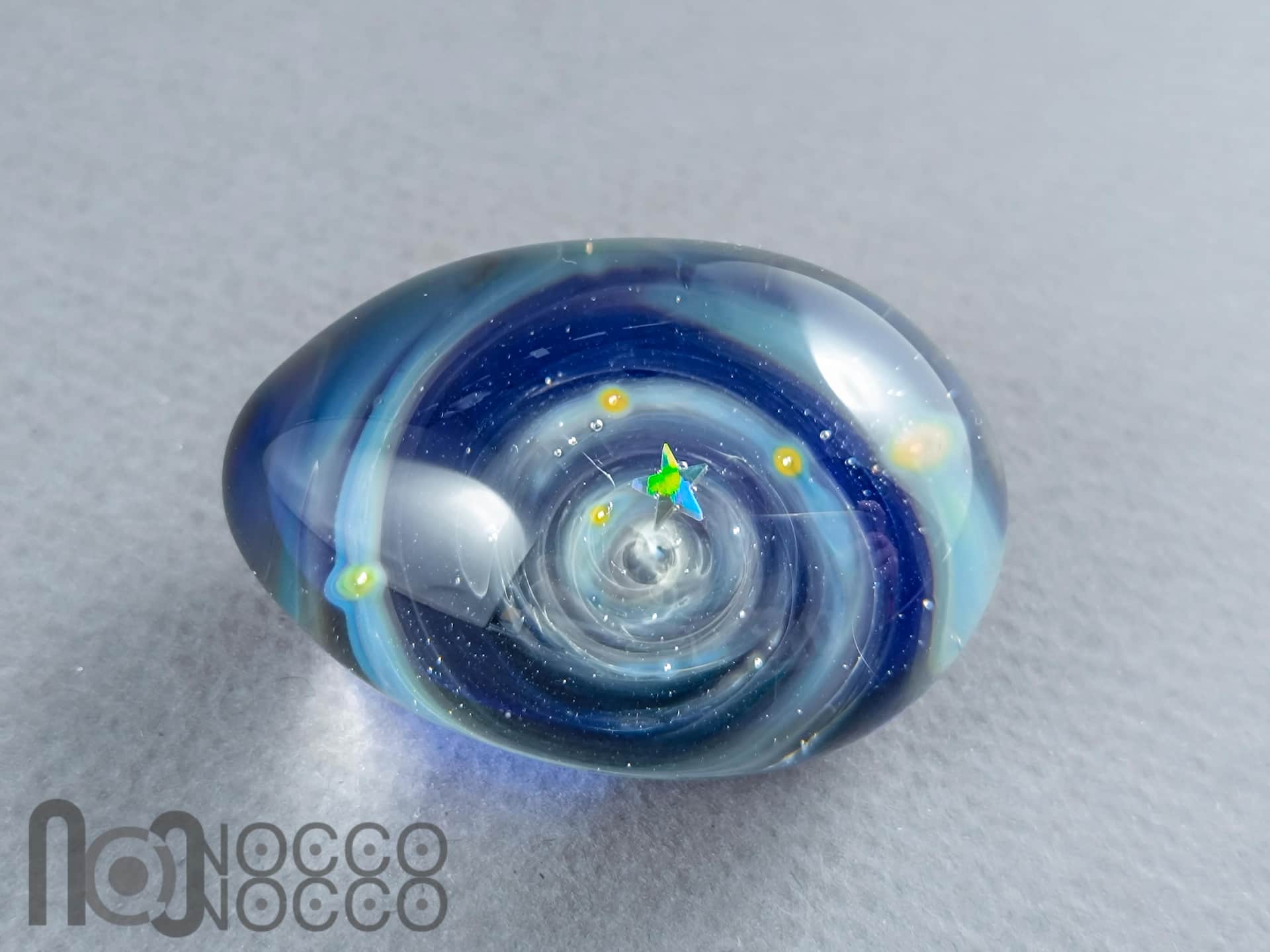
The opal planets, moons and stars floating in many NoccoNocco pieces are lab-created opals. Natural opal holds water and does not expand and shrink the way borosilicate does in the heat, so it cracks when it is encased. Sinem uses a special opal made to be compatible with the glass, which survives the torch and the kiln and keeps its fire inside the piece.
Lab-created opal has the same play of colour that makes opal loved. The difference is that it was grown to work in glass.
From torch to kiln
- Clear and coloured borosilicate is heated at the torch and shaped by hand.
- Silver or gold is fumed onto the hot glass, often in several passes.
- Opals and other details are set in place, then everything is encased in clear glass.
- The finished piece is annealed in a kiln: cooled slowly and evenly so the glass is strong and free of stress.
Questions
Is fumed glass real silver and gold?
Yes. The colour comes from .999 fine silver or 24k gold vaporised in the flame. The layer is microscopic, so the metal adds colour rather than weight or value as bullion.
Will the colour fade in sunlight?
No. The fumed layer is melted into the glass or encased under clear glass, so light does not fade it and it cannot wear off.
Are the opals natural?
They are lab-created. Natural opal cracks in hot glass, so a special opal made to be compatible with borosilicate is used.
Why does my piece look different from the photo?
Fumed glass changes with the light and the background behind it. Every photo shows the actual piece, and in person the colours shift as you turn it.
About the author
Sinem is the glass artist behind NoccoNocco. She shapes every piece by hand at the torch in her studio in Akrata, on the Gulf of Corinth in Greece. More about the studio