How to use a glass dip pen: ink, writing and care
By Sinem, NoccoNocco glass studio · Updated 28 November 2026 · 5 min read
A glass dip pen holds ink in fine spiral grooves around its tip. Dip it so the ink covers the grooves, touch off the extra on the rim of the bottle, write with the pen held fairly upright and turn it slowly as the line fades. Rinse the tip in clean water when you finish. Water-based fountain-pen inks suit it best.
What a glass dip pen is
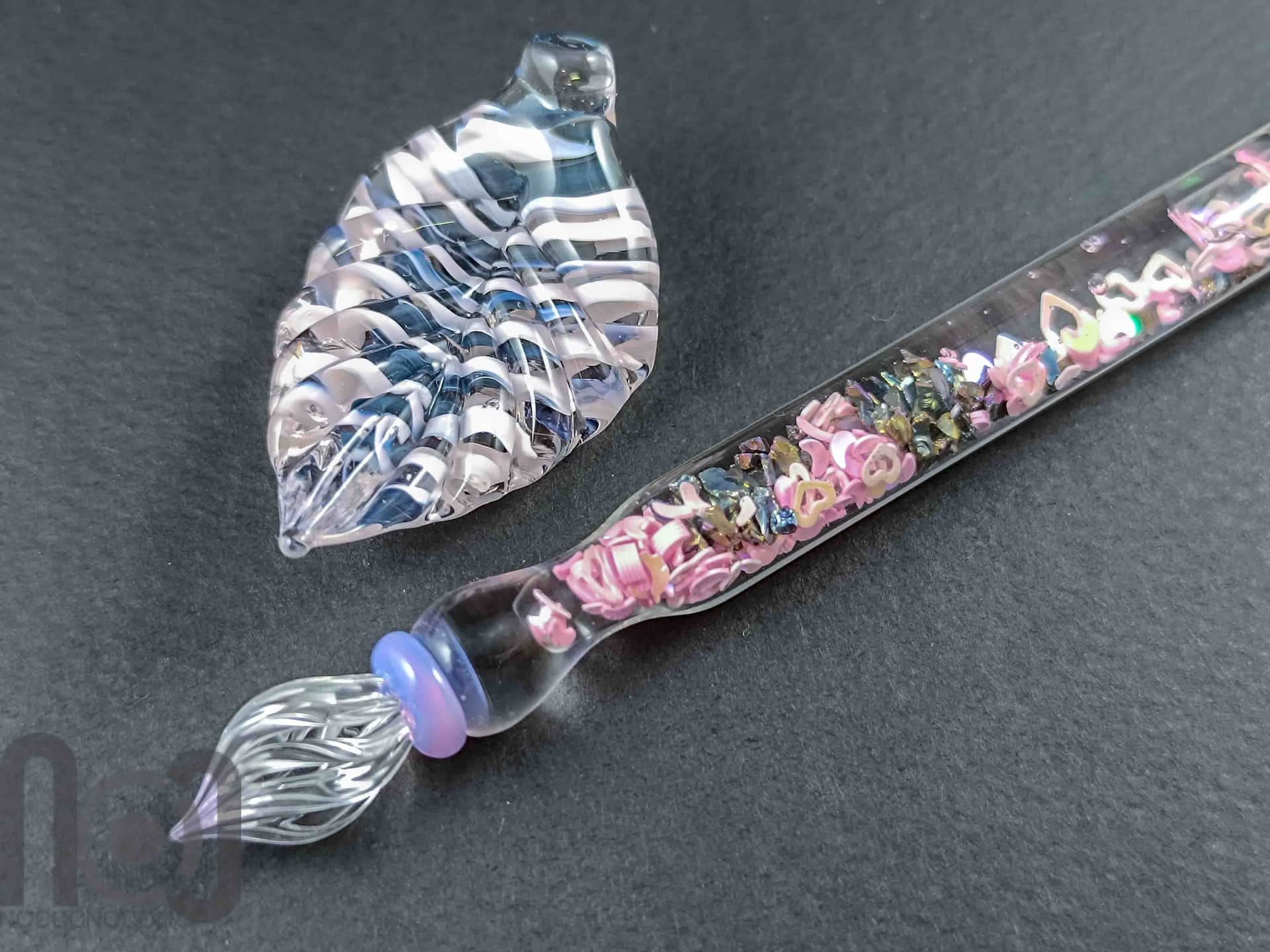
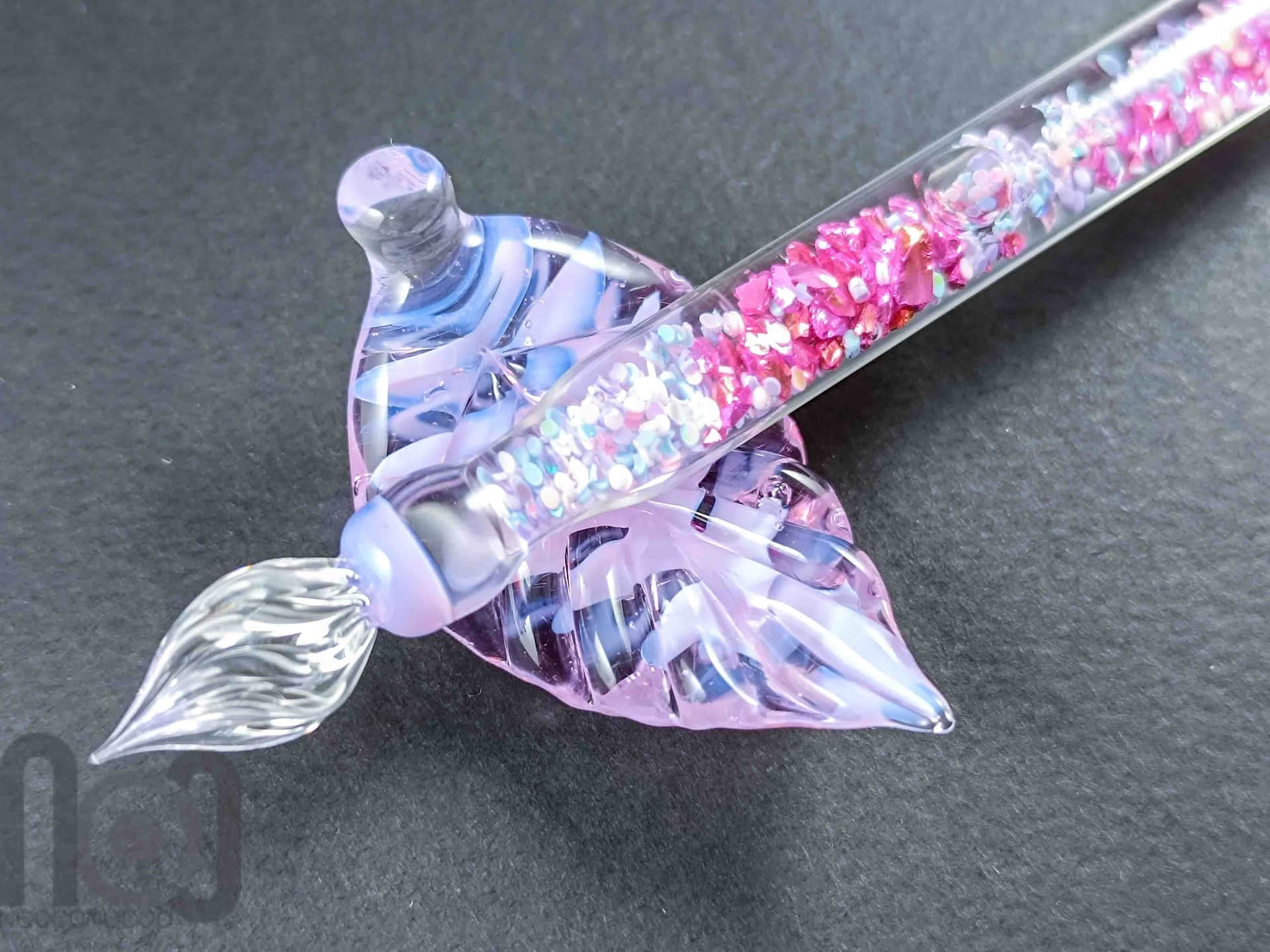
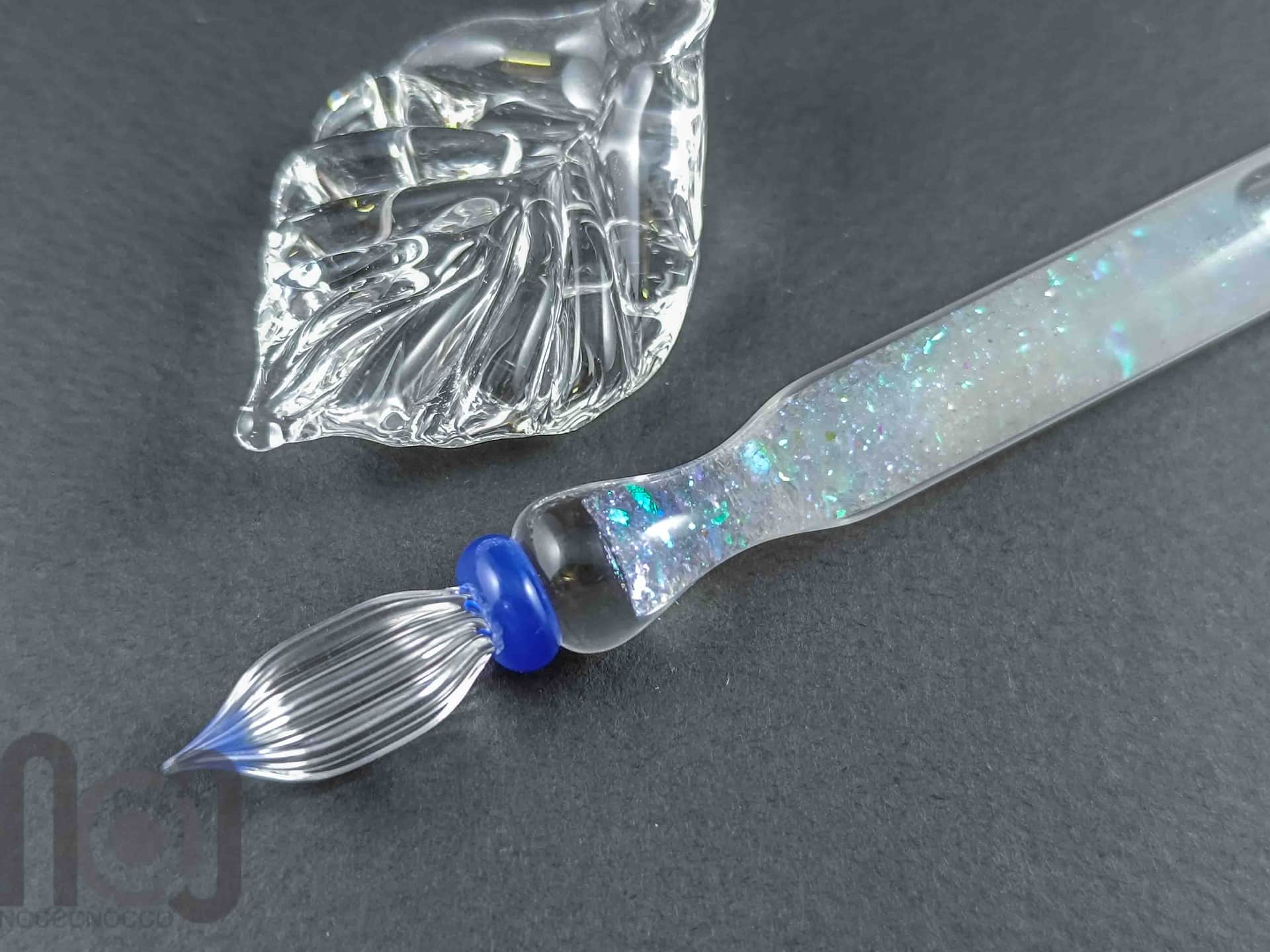
A glass dip pen is a single piece of glass with a pointed tip cut into spiral grooves. When you dip it, ink runs up the grooves and is held there by capillary action, then flows back down to the point as you write. There is no nib, no cartridge and nothing that moves.
Glass pens are generally credited to Japan: the usual account is that a wind-chime maker, Sasaki Sadajirō, made the first ones in 1902. Today they are made by hand in small studios, and the shaft has become a place for colour and decoration.
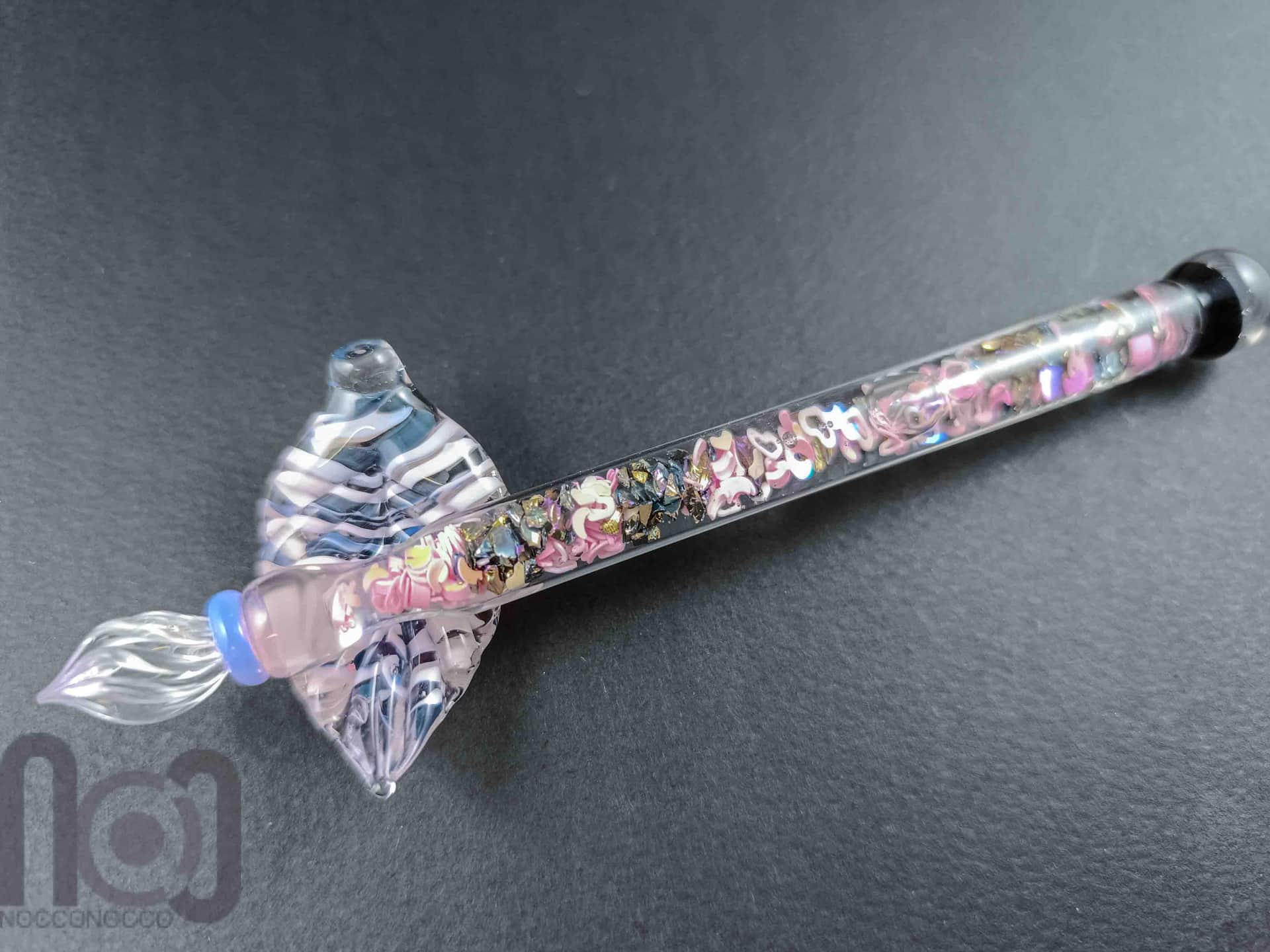
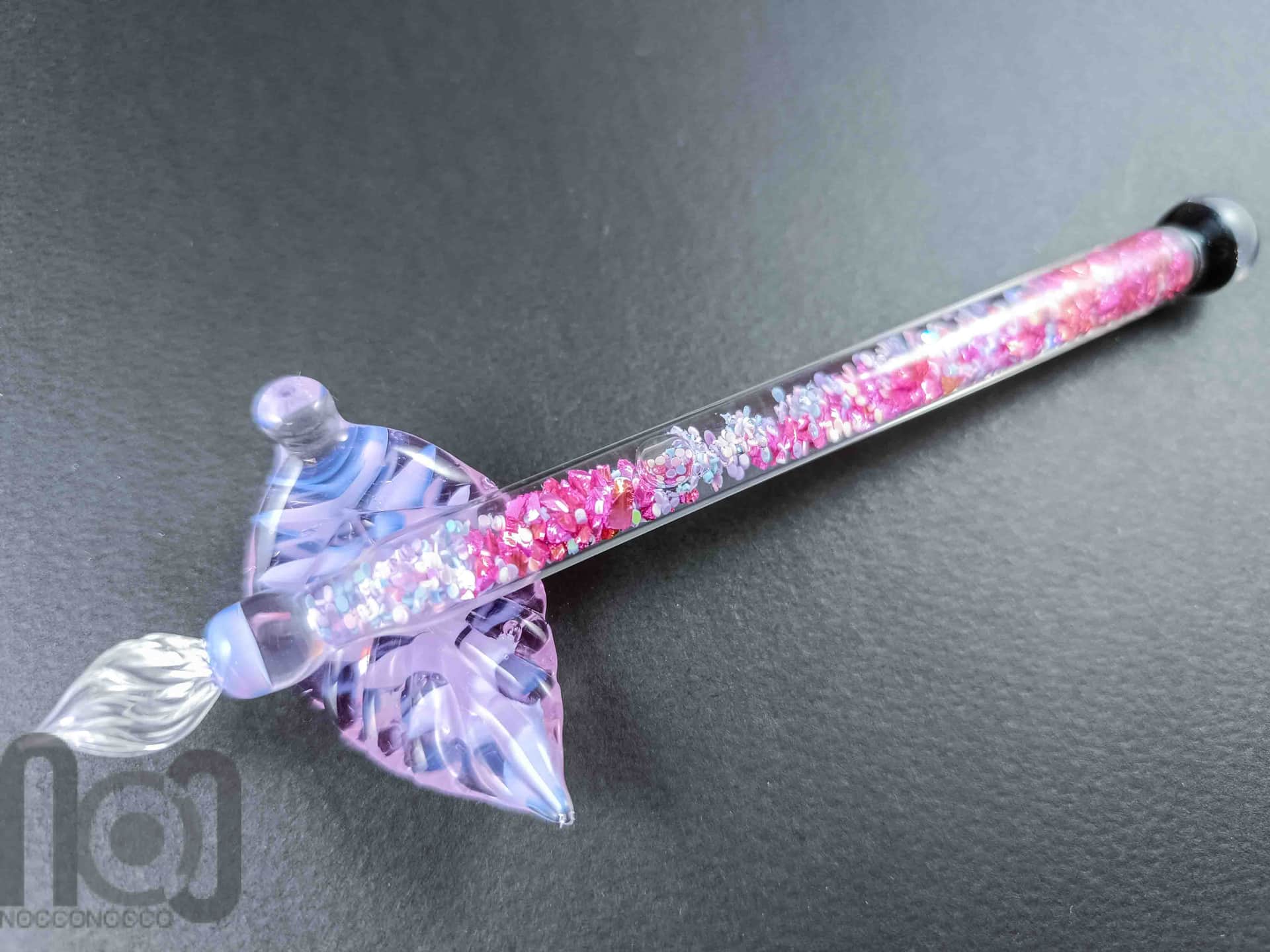
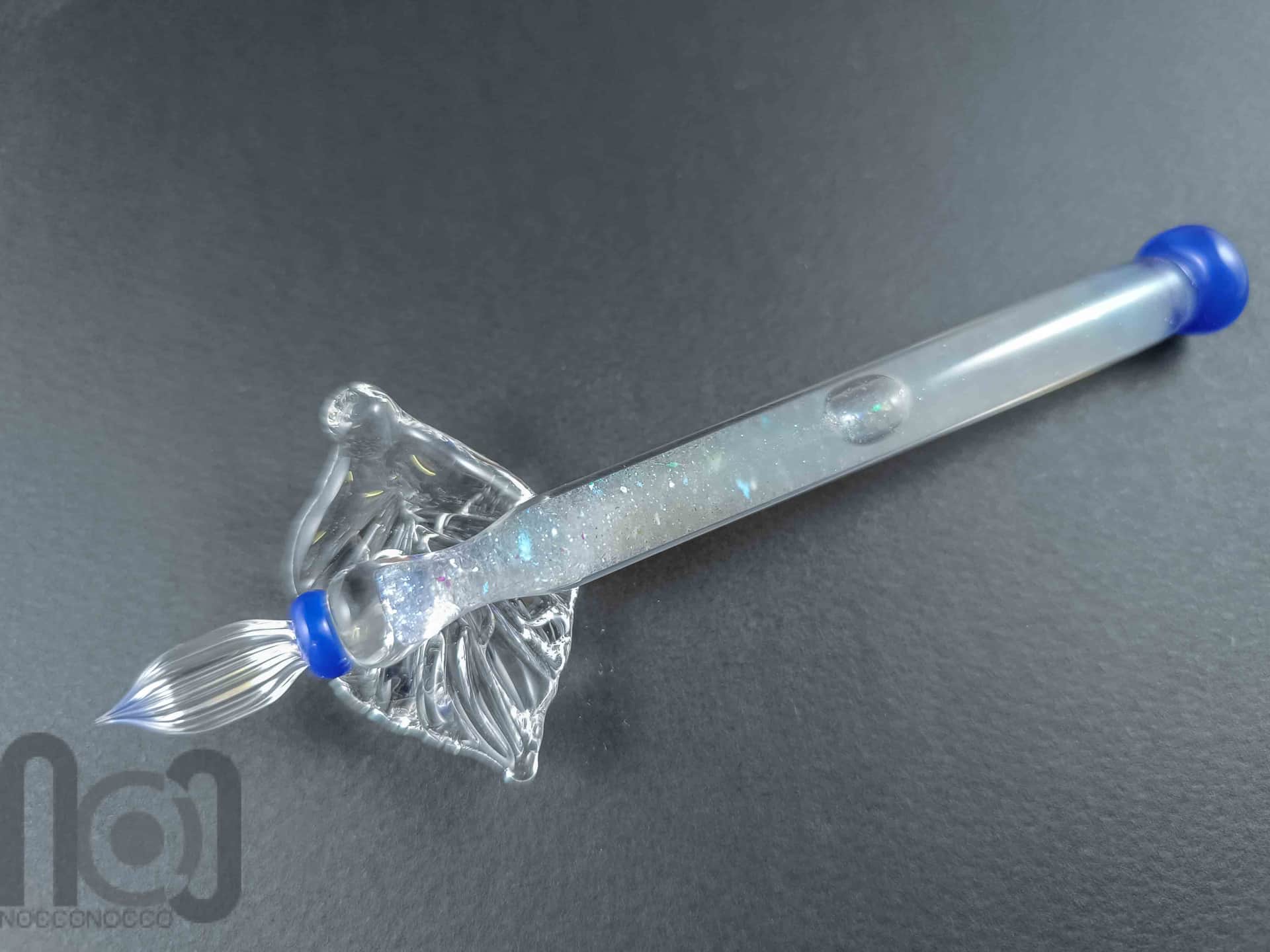
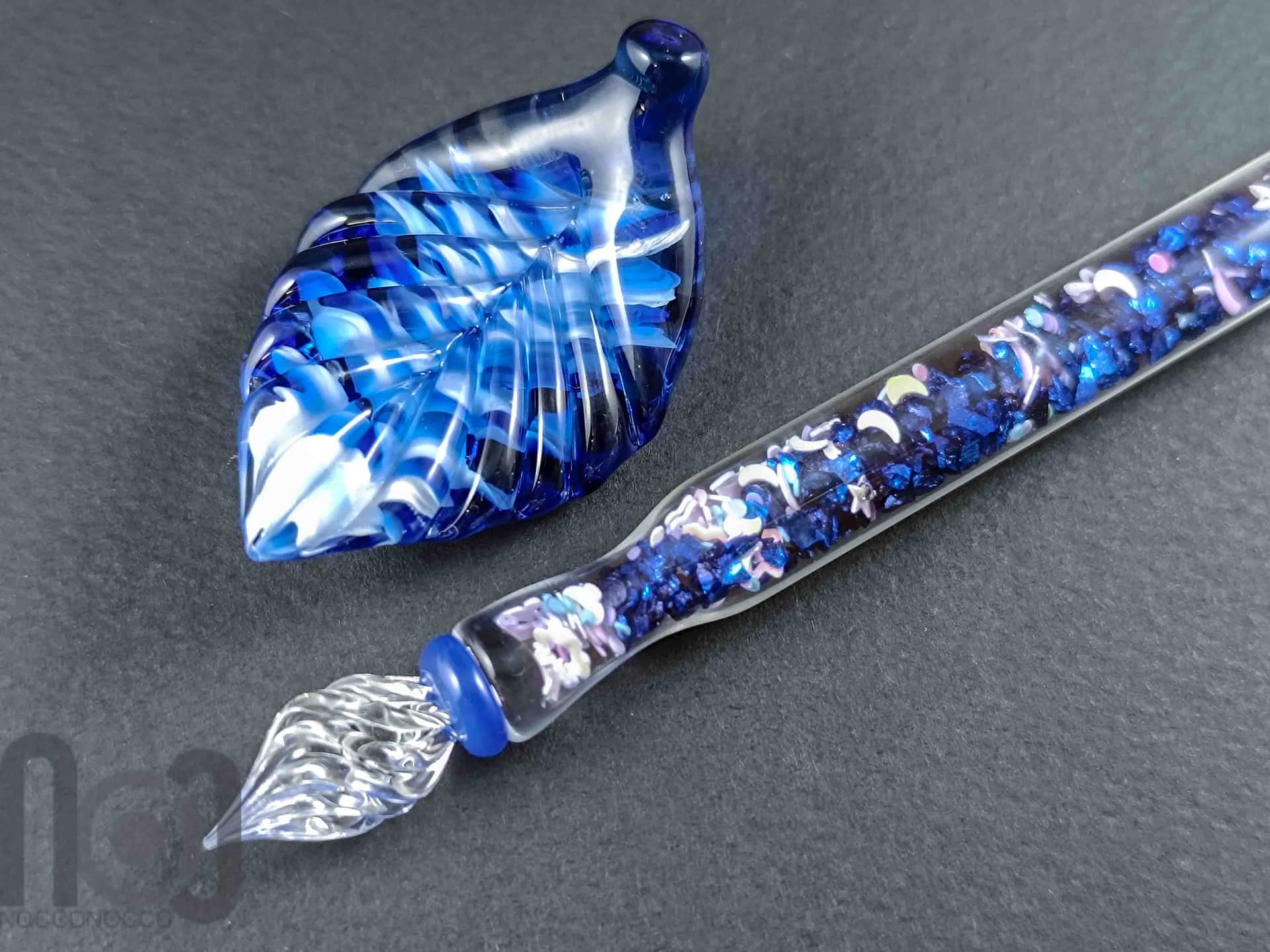
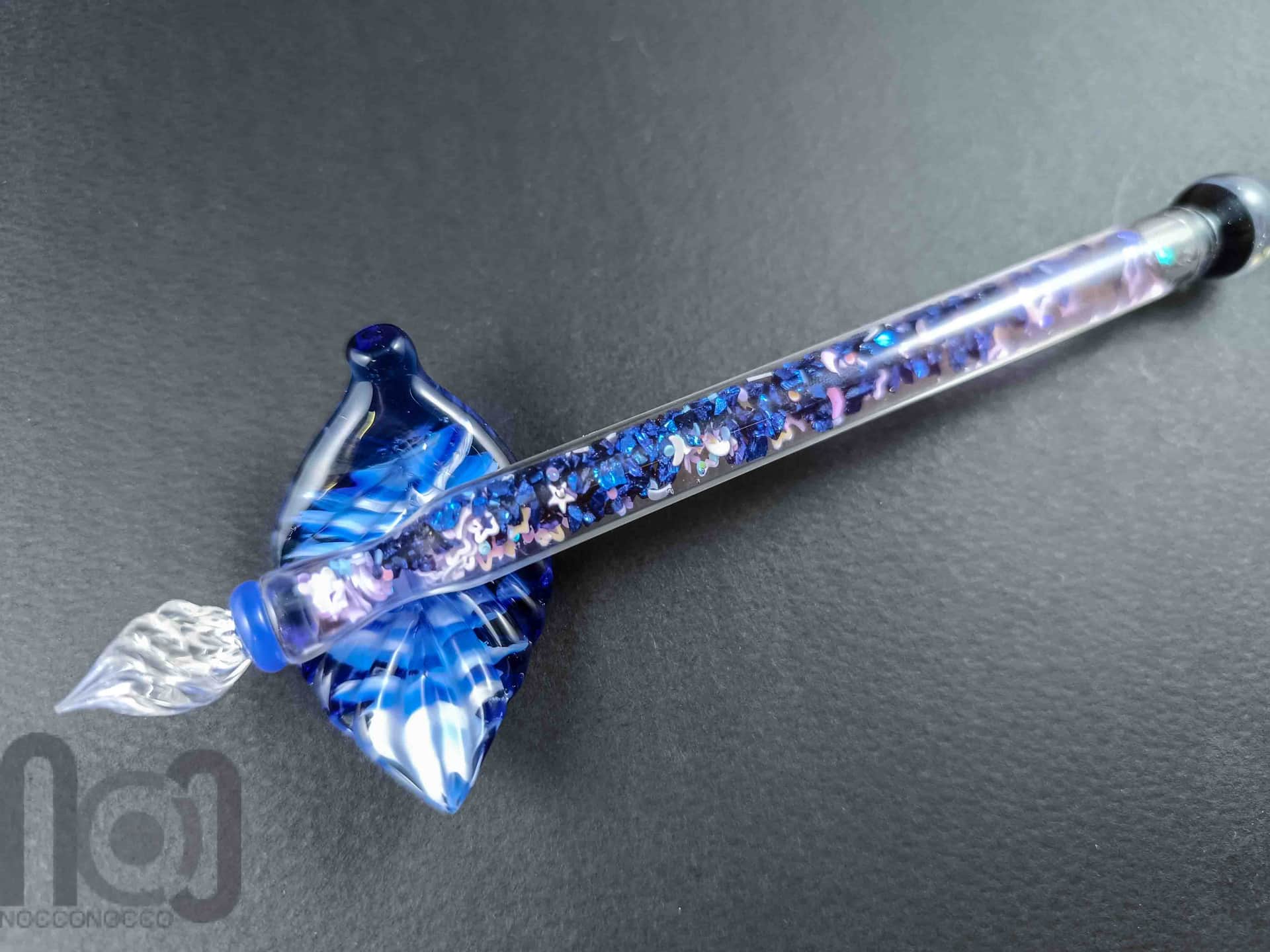
At NoccoNocco every pen is lampworked by hand from borosilicate glass, and no two are alike: some carry a small galaxy marble on top, others have opal, glass pieces or fumed colour inside the shaft. See the dip pens.
How to dip and write
- Dip to the top of the grooves, not deeper. Ink above the grooves only drips.
- Touch the tip on the rim of the bottle to take off the extra drop.
- Hold the pen fairly upright, steeper than a fountain pen. Around 45 to 60 degrees works for most hands.
- Write with light pressure. The glass tip glides; pressing harder does not make the line darker.
- Turn the pen slowly as the line pales. Each groove holds its own ink, so a quarter turn brings fresh ink to the point.
- Re-dip when the line goes dry. How far one dip lasts depends on the pen, the ink and the paper: usually several lines.
Smooth paper gives the cleanest line and makes each dip last longer. Very soft or absorbent paper drinks the ink quickly and can feather.
Which ink to use
Water-based bottled fountain-pen ink is the easiest choice: it flows well in the grooves and rinses out in seconds, so you can change colour as often as you like.
Calligraphy inks and drawing inks also work, but rinse the pen straight after use. Shellac-based inks, such as most India inks, are best avoided: they dry into a waterproof coating that can build up in the grooves and spoil the flow.
| Ink | Works? | Rinse |
|---|---|---|
| Fountain-pen ink (water-based) | Yes, the best match | Clean water |
| Calligraphy / drawing ink | Yes | Straight after use |
| Shimmer inks | Yes; stir the bottle first | Straight after use |
| India ink (shellac-based) | Not recommended | Soak at once if used |
Cleaning
- Rinse the tip in a glass of clean water, or under a gentle tap, until the water runs clear.
- Dry it with a soft, lint-free cloth, working along the grooves.
- If ink has dried in the grooves, leave the tip to soak in lukewarm water for a while, then rinse again.
- Never use a dishwasher, abrasive pads or metal tools on the tip.
Storing it safely
Borosilicate glass is strong, but the fine tip is the most delicate part. Rest the pen on a pen rest or a soft pen pillow rather than on a hard desk, keep it away from the edge, and carry it in a padded case. If the tip ever chips, write to the studio before trying to fix it yourself.
Questions
How long does one dip last?
Usually several lines. It depends on the pen, the ink and the paper: smooth paper and a fully dipped tip go furthest.
Can I use a glass dip pen for calligraphy?
Yes, for monoline lettering, handwriting, labels and drawing. A glass tip gives an even line, so it does not make the thick-and-thin strokes of a flexible steel nib.
Which ink should I avoid?
Shellac-based inks such as most India inks. They dry into a waterproof coating that builds up in the grooves.
Is a glass dip pen fragile?
The borosilicate body is sturdy, but the tip can chip if it is dropped on a hard floor. Keep it on a pen rest and carry it in a padded case.
Can I change ink colours?
Yes. Rinse the tip in clean water, dry it with a soft cloth, and dip into the next colour.
About the author
Sinem is the glass artist behind NoccoNocco. She shapes every piece by hand at the torch in her studio in Akrata, on the Gulf of Corinth in Greece. More about the studio